Buying or selling property without verifying its legal status can lead to serious financial and legal problems. Many buyers later discover that the property has an unpaid loan, mortgage, or ownership dispute. An Encumbrance Certificate (EC) helps prevent these risks to a larger extent. It is an official government document that shows the complete legal and financial history of a property. By checking the EC, you can confirm whether the property is safe to buy, free from loans, and legally owned by the seller.
What is Encumbrance Certificate?
It is a legal document issued by the Sub-Registrar Office that confirms whether a property has any registered liabilities such as loans, mortgages, or ownership transfers.
It provides official proof of the property’s legal status and transaction history for a selected period.
What does an Encumbrance Certificate show?
An EC shows important details such as:
- Name of the current and previous property owners
- Property description and location
- Survey number and document number
- Sale and purchase transactions
- Mortgage or loan registrations
- Gift, settlement, or lease records
- Registration dates and document numbers
- Name of buyer and seller in each transaction
- Number of transactions over that property
If no transactions or liabilities exist during the selected period, the EC will show a Nil Encumbrance Certificate, confirming the property has no registered legal or financial claims.
In simple terms, EC answers one important question:
“Are there any financial liabilities or legal problems linked to the property?” – But it alone is not the be all and end all.
Why is Encumbrance Certificate Important?
Encumbrance Certificate is required for:
- Property Purchase: Buyers verify EC to ensure the property has no legal problems.
- Home Loan Approval: Banks require EC before approving loans.
- Property Sale: Sellers must provide EC to prove ownership.
- Property Mutation: Required to update ownership in revenue records.
- Legal Verification: EC provides official proof of property transaction history.
- Lease and MoD also
Where to Get Encumbrance Certificate?
You can get EC from:
- Sub-Registrar Office (offline)
- Tamil Nadu Registration Department website (online)
In Tamil Nadu, EC can be easily obtained online without visiting government offices.
Types of Encumbrance Certificate
There are two types of EC issued by the Sub-Registrar Office. These forms help you understand whether a property has any registered transactions or is completely clear.
1. Form 15 – Encumbrance Certificate (EC)
Form 15 is issued when the property has one or more registered transactions during the selected period.
This form includes details such as:
- Property sale transactions
- Home loan or mortgage registrations
- Gift or settlement deeds
- Lease or transfer records
- Names of buyers and sellers
- Transaction dates and document numbers
This form helps verify the complete legal and ownership history of the property.
2. Form 16 – Nil Encumbrance Certificate (Non-Encumbrance Certificate)
Form 16 is issued when no registered transactions are found for the property during the selected period.
This means:
- The property has no registered loans
- No mortgage is recorded
- No ownership transfer occurred
- The property is legally clear for that period
- For 100% confirmation, we may also go for personal search
This certificate confirms that the property has no registered legal or financial liabilities. Hence, it is also called a Nil Encumbrance Certificate (Non-EC).
Difference Between Encumbrance Certificate and Non-Encumbrance Certificate
| Feature | Encumbrance Certificate (Form 15) | Non-Encumbrance Certificate (Form 16) |
| Meaning | Shows registered property transactions | Shows no registered transactions |
| Transactions | One or more transactions exist | No transactions exist |
| Loans or mortgage | May be present | None present |
| Ownership history | Available | Not available |
| Legal status | Shows liabilities if any | Confirms property is clear |
How many years of EC are required?
Recommended period:
- Minimum: 13 years
- Ideal: 30 years
Banks prefer 13 to 30 years EC for loan approval.
Encumbrance Certificate Fees in Tamil Nadu
- Online EC search is usually free.
- Certified EC copies may require a small government fee depending on the period requested.
Important Points to Remember
EC only shows registered transactions.
It may not show:
- Unregistered agreements
- Court disputes
- Informal transactions
- Acquisitions – scheme coverages
Always verify the property legally before buying.
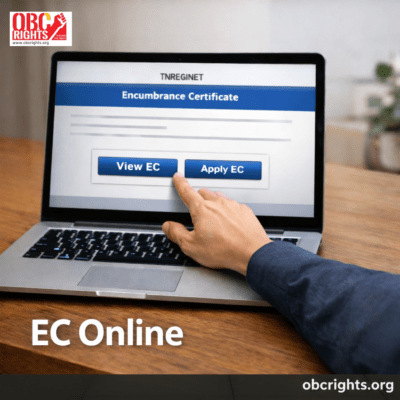
How to Check EC Online?
You can easily view EC details online using the official portal.
👉 Read the full guide here: How to Check EC Online in Tamil Nadu? (Step-by-Step Guide)
Conclusion
Encumbrance Certificate is an important document for property verification. It protects buyers, ensures transparency, and confirms legal ownership. In Tamil Nadu, EC can be easily checked and downloaded online, making property verification fast and secure.
Before buying any property, always verify the Encumbrance Certificate for at least 13 to 30 years to avoid legal and financial risks. The best form of verification is to do a personal search.
To know more about Verification and guidance, contact our people help desk.
CONTACT: +91 7598800123