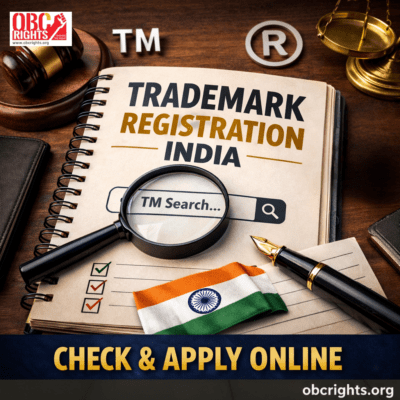
Building a brand takes years of effort, trust, and public recognition. Whether it is a website, YouTube channel, business, NGO, or startup, your brand name becomes your identity. Without legal protection, anyone can copy or misuse it. Trademark registration in India provides legal ownership and exclusive rights over your brand name, logo, or slogan.
This guide explains what trademark registration is, how to register trademark in India online, how to check a trademark, the registration process, cost, legal protection under the Trade Marks Act, and important mistakes to avoid.
What is Trademark Registration?
A trademark is a legally protected name, logo, symbol, or phrase that identifies your brand and distinguishes it from others.
Trademark registration is the official process of registering your brand with the Government of India under the Trade Marks Act, 1999. Once registered, the owner gets exclusive legal rights to use that trademark.
After applying, you can use the ™ symbol. After approval, you can use the ® symbol.
Why Trademark Registration is Important
Trademark registration protects your brand legally and prevents misuse.
Key benefits include:
- Gives exclusive ownership of your brand name
- Prevents others from copying or using similar names
- Provides legal protection under Indian law
- Builds trust and credibility
- Helps in business growth and expansion
- Protects website and digital brand identity
- Allows legal action against infringers
- Without registration, proving ownership becomes difficult in legal disputes.
What Can Be Registered as a Trademark?
In India, you can register:
- Business name
- Website name
- NGO name
- Logo
- Brand name
- Product name
- Service name
- Tagline or slogan
- App name
- YouTube channel name
Even individuals and website owners can apply without registering a company.
Trademark Act in India (Trade Marks Act, 1999)
The Trade Marks Act, 1999 is the primary law that oversees trademark protection and registration in India. This law provides the legal framework for trademark protection, registration, and enforcement.
The Act ensures:
- Exclusive rights to trademark owners
- Protection against infringement
- Legal remedies for misuse
- Rules for registration and renewal
- Trademark validity and ownership protection
In India, trademark registration is handled by the Controller General of Patents, Designs and Trade Marks.
Trademark Classes in India
Trademark registration is divided into 45 classes based on business type.
| Category | Class Numbers | Covers | Description |
| Goods | Classes 1–34 | Physical products | Includes items such as chemicals, machinery, electronics, clothing, food products, medicines, furniture, and other tangible goods |
| Services | Classes 35–45 | Services | Includes services such as advertising, education, legal services, website services, technology services, and online content |
In Simple:
- Classes 1–34 cover goods
- Classes 35–45 cover services
Selecting the appropriate class is important to ensure complete legal protection for your trademark.
How to Check a Trademark in India
Before applying, you must check whether your trademark already exists.
Follow these steps:
- Visit the official website: ipindia.gov.in
- Click on “Public Search”
- Select Wordmark or Vienna Code
- Enter your brand name
- Select relevant class
- Click Search
- Results will show whether similar or identical trademarks exist.
If a similar trademark exists in the same class, your application may be rejected or objected.
Trademark Registration India Online: Step-by-Step Process
Trademark registration can be done online through the official government portal.
Step 1: Trademark Search
- Check availability of your brand name.
- This helps avoid rejection and legal conflicts.
Step 2: File Trademark Application
Submit application online with:
- Applicant name and address
- Brand name or logo
- Trademark class
- Description of services or goods
- After submission, you receive an application number.
You can immediately use ™ symbol.
Step 3: Examination by Trademark Office
Government officers examine your application to check:
- Similar existing trademarks
- Legal compliance
- Distinctiveness of the name
- This stage usually takes 1–3 months.
If objections arise, you must reply.
Step 4: Publication in Trademark Journal
- If accepted, the trademark is published publicly.
- This allows others to oppose the registration.
- The opposition period is 4 months.
Step 5: Trademark Registration Certificate
- If no objections are filed, the trademark is formally approved and registered.
- You can now use the ® symbol.
Trademark Registration Cost in India
Government fees depend on applicant type.
- For individuals, startups, and NGOs: ₹4500 per class (online)
- For companies: ₹9000 per class
Professional fees may apply if using agents.
Trademark Registration Validity
- Trademark registration is valid for 10 years.
- It can be renewed every 10 years indefinitely.
- This ensures lifetime protection if renewed properly.
Documents Required for Trademark Registration
The following documents are typically needed when applying for trademark registration in India:
- Identity proof of the applicant (such as Aadhaar card, PAN card, or passport)
- Address proof (such as Aadhaar, voter ID, driving licence, or utility bill)
- Trademark details, including the brand name, logo, or slogan (logo should be in clear image format if applicable)
- Business-related proof, if applying as a company, startup, or organization (such as GST registration, MSME/Udyam certificate, or incorporation certificate)
- An authorization letter or Power of Attorney, if the application is submitted through a trademark agent or legal representative
How to Check Trademark Registration Status
Steps:
- Visit ipindia.gov.in
- Click Trademark Status
- Enter application number
- View current status
This helps track approval progress.
Common Reasons for Trademark Rejection
Applications may be rejected if:
- Name is already registered
- The name is too generic
- Name is similar to an existing trademark
- Name creates confusion
- Incorrect class selection
- Choosing a unique and distinctive name improves approval chances.
Legal Rights After Trademark Registration
Trademark owners can:
- Stop others from using similar names
- File legal cases against infringers
- Claim compensation
- Protect brand identity nationwide
- This gives full legal protection.
Mistakes to Avoid During Trademark Registration
Avoid these common mistakes:
- Not checking trademark availability
- Choosing generic names
- Selecting the wrong trademark class
- Providing incorrect information
- Ignoring objections
Careful application improves approval success.
Conclusion
Trademark registration in India is essential for protecting your brand identity and ensuring exclusive ownership. It prevents misuse, builds trust, and provides legal protection under the Trade Marks Act, 1999. The online registration process is simple, affordable, and available to individuals, businesses, and digital creators.
Registering your trademark secures your brand’s future and protects the effort you invested in building it.